



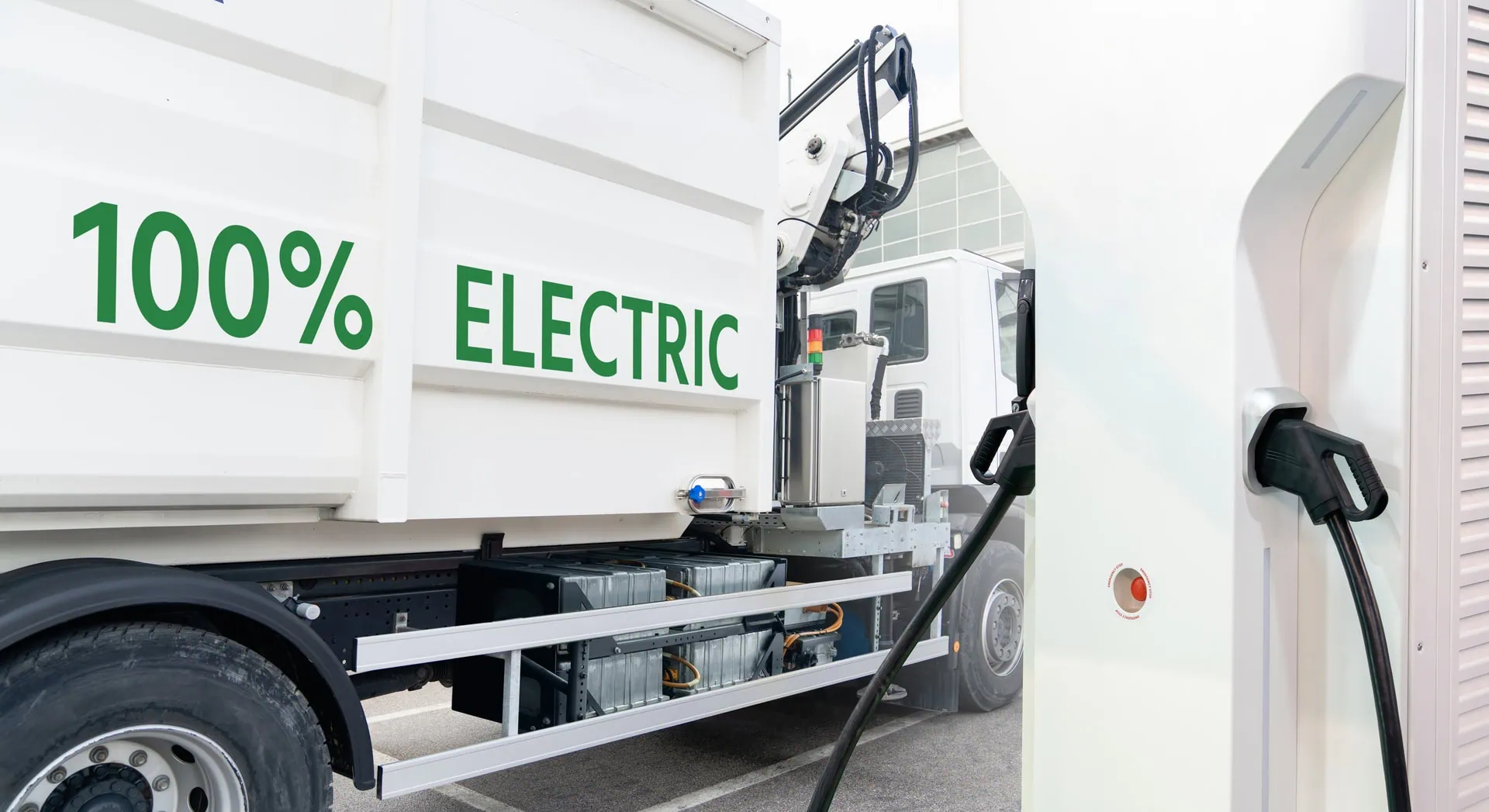
ISO 17409:2020, one of the international norms for charging infrastructure safety in the field of electric vehicles, defines conductive charging safety requirements for road vehicles, including electric trucks. This standard provides a technical framework for safe power transfer, insulation, short-circuit protection, and thermal safety measures at the vehicle–charging station interface.
Charging Safety and Electrical System Architecture
The ISO 17409 standard requires ensuring safety in conductive connections (AC or DC) made between the vehicle’s power circuits and external electrical supply, as well as guaranteeing protection mechanisms and insulation resistance.
At the same time, it mandates compliance with standard charging modes (Mode 2, 3, and 4 as defined by IEC 61851-1) and verified connection protocols.
In this context, electric truck manufacturers and infrastructure providers need to design the interface between on-vehicle battery/power electronics systems and external charging units in accordance with the safety criteria set out in ISO 17409. In particular, safety measures such as insulation resistance, grounding, short-circuit and overcurrent protection, DC/AC connection safety, and “vehicle–station connector interlock” are defined within the standard.
International Standards Compliance and the Charging Infrastructure Safety Perspective
ISO 17409:2020 is accepted as an international reference for safe charging connections of electric road vehicles.
This highlights that battery and high-voltage systems used in electric trucks must be prepared not only for in-vehicle safety but also for a safe energy transfer framework compatible with charging infrastructure. Compliance with this standard stands out as an important technical requirement both in terms of legal/regulatory obligations and user safety.
Engineering and Implementation Dimension: Design Requirements for Safe Charging
In charging and battery systems to be applied in electric trucks, components such as insulation materials, cable–connector systems, AC/DC interface hardware, grounding and protection circuits, and connector locking mechanisms need to be designed in compliance with the standard.
In addition, safety measures such as thermal management, overcurrent/short-circuit protection, insulation monitoring, connection safety, and fault-protection circuits during charging should be part of the engineering process. This is of critical importance for electric trucks to operate safely and in a certified manner in daily use as well as under heavy-load and long-haul conditions.
Current Situation and Sectoral Importance
The international validity of the ISO 17409 standard for electric road vehicles constitutes a central reference for electric truck production and charging infrastructure. If manufacturers and infrastructure providers develop systems compliant with this standard, safety risks at the vehicle–station interface will be reduced, while the reliability of charging infrastructure will increase.
Within this framework, adopting a production and design approach focused on high-voltage safety and charging safety in electric trucks is considered an important step toward a safe and sustainable transformation in the sector.
