



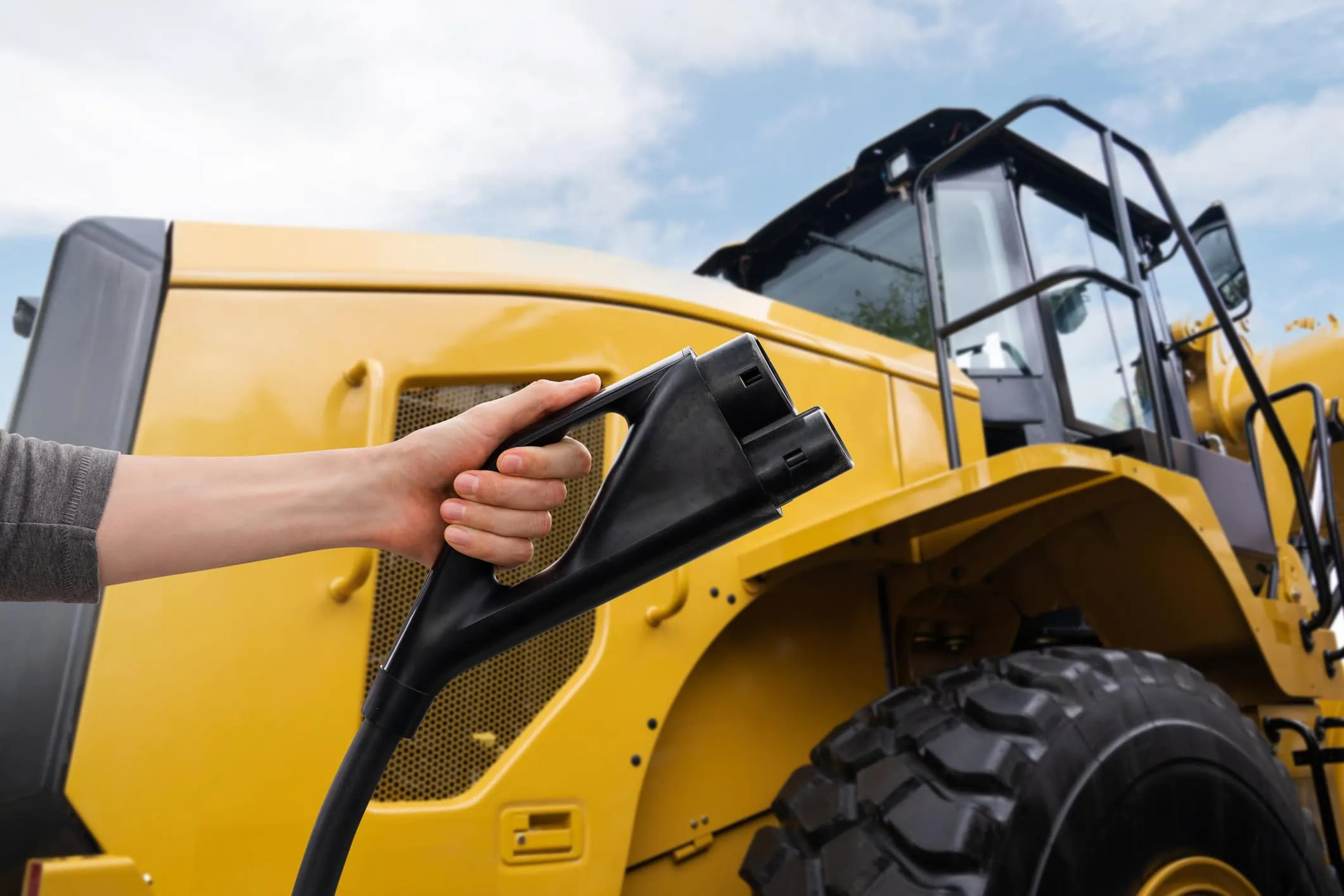
Electric and hybrid-powered construction machinery are increasingly being preferred worldwide due to rising environmental awareness and emissions control requirements—as well as criteria such as energy costs and operational efficiency. However, for these machines to be safe, efficient, and sustainable, compliance with international norms is essential in areas such as electrical and electronic system safety, electromagnetic compatibility, and overall machine safety.
Sectoral / Technical Framework
In electric or hybrid construction machinery (such as forklifts, telescopic handlers, small cranes, and urban construction machines), battery, inverter, and electric motor systems must be designed to withstand high voltage, current fluctuations, and environmental impacts. Compared with conventional hydraulic or internal combustion engine systems, these machines require coordinated software and hardware integration of energy management, torque/force control, motor control, and safety circuits.
In this context, ensuring chassis grounding, short-circuit protection, insulation, emergency stop innovations, and compatibility of electronic control systems in electric construction machinery is critical for structural safety and operator safety.
However, when referring to an “electric/hybrid construction machinery standard”—particularly for hydro-mechanical machines or heavy construction equipment—the issue is complex: a specific assessment is required for each machine class.
Standards and Normative Framework
• One of the international norms developed for electric “road vehicles / land vehicles” is the ISO 6469-3 standard. This standard defines electrical safety requirements for electric vehicles (particularly road vehicles) with high-voltage electric propulsion systems and auxiliary electrical circuits, including criteria such as insulation, protection against electric shock, thermal protection, and circuit protection.
• In addition, other parts such as ISO 6469-2 address topics including operational safety, system safety, and fault protection of vehicles with electric propulsion.
• In construction and earthmoving machinery—especially those incorporating electrical/electronic subsystems—the ISO 13766 standard may serve as a reference for electromagnetic compatibility and electrical safety. This standard includes test and acceptance criteria for assessing the electromagnetic compatibility (EMC) of construction/earthmoving machinery with internal electrical power sources that do not use internal combustion engines.
• From a more general machine safety perspective, standards such as IEC 60204-1 are referenced for low-voltage control circuits and machine control systems in electrical equipment. This standard regulates the safety of electrical equipment of machines, protective measures for control circuits, grounding, and switching requirements.
• In addition, for complex control systems involving the design and testing of automation and safety functions in software and hardware, standards such as ISO 13849 can be used for a functional safety approach. This standard regulates the design and validation requirements of safety-related components in machine control systems.
These normative frameworks constitute the core references that ensure electric or hybrid construction machinery is standards-compliant in terms of both electrical/electronic safety and machine safety.
National and International Trends
Globally, the preference for electric/hybrid models in the construction and heavy machinery sector is directly linked to reducing carbon emissions, lowering operating costs, and achieving environmental sustainability targets. Particularly since the 2020s, many international manufacturers have added products such as electric forklifts, electric loaders, and battery-powered compact machines to their portfolios.
In Türkiye as well, battery-propulsion modules developed by some manufacturers for electric machines and product launches emphasizing “zero emissions / low noise” are being observed. For example, a Turkish manufacturer states that it offers small compact machines powered by lithium-ion batteries.
However, this transformation is not yet widespread; at present, it is observed at the level of selected models and manufacturers. The adoption of electric/hybrid machines brings with it a range of technical and logistical issues, including infrastructure (charging, maintenance), operator training, and normative compliance testing.
R&D and Engineering Dimension
Engineering teams developing electric and hybrid construction machinery are working on battery management, thermal control, high-voltage insulation, inverter and motor control circuits, regenerative braking, energy efficiency optimization, load-moment control, and electronic safety circuits. In this way, both the performance and safety standards of machines can be made more controlled compared with conventional machinery.
In addition, ensuring that sensor, electronic circuit, software, and hardware integration in machine control systems is reliable, tested, and standardized is critical for machine lifetime, maintenance needs, and safety. At this point, the application of functional safety standards such as ISO 13849 serves as an important reference in terms of fault tolerance and operational safety.
Assessment & Current Situation
• Electric and hybrid construction machinery stands out as an important future-oriented segment due to technical requirements, environmental targets, and operating cost advantages.
• However, for these machines to be fully standards-compliant and certified in terms of safety and security, attention must be paid to areas such as electrical safety, EMC, machine safety, and control system safety, and appropriate norms (such as ISO 13766, ISO 6469-3, IEC 60204-1, ISO 13849, etc.) must be applied.
• In Türkiye, for now, this transformation appears at the level of “selected models / manufacturers”; its widespread adoption or penetration across the entire sector cannot yet be described as a “generally accepted standard practice.”
• If infrastructure (charging, maintenance, maintenance/repair standards), operator training, and periodic inspections are secured, electric/hybrid construction machinery—with international standards compliance and domestic production advantages—holds significant potential in Türkiye.
