



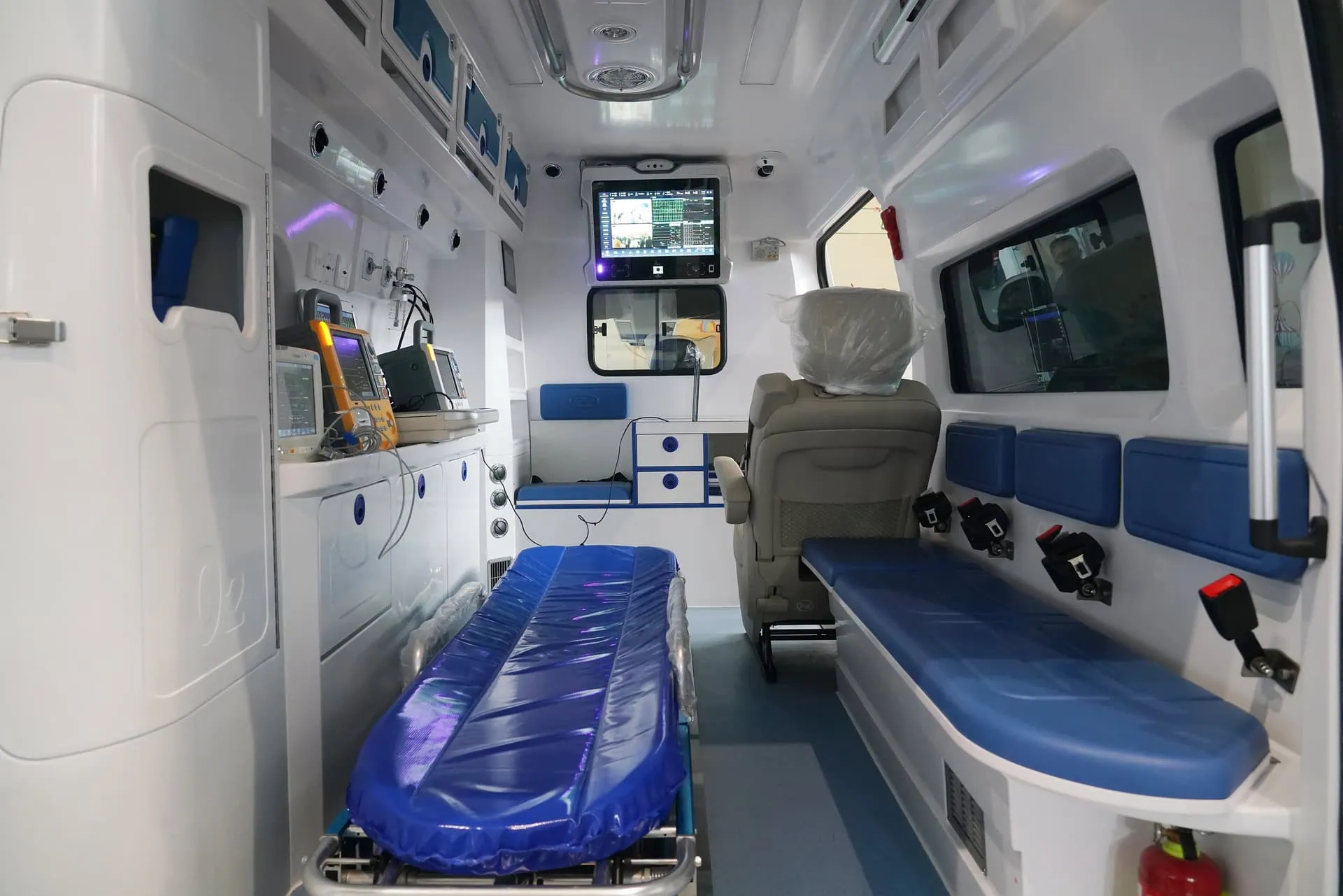
In Türkiye, the modular cabin approach in ambulance production is being increasingly adopted. Designing in-vehicle components as independent modules provides flexibility in maintenance and repair processes, while contributing to reduced vehicle downtime and extended cabin service life.
Modular Design and Production Approach
In modular ambulance cabins, medical cabinets, oxygen and vacuum lines, stretcher systems, seating units and control panels are handled as separate modules. Thanks to this structure, when a malfunction occurs or renewal is required, work can be carried out on the relevant module only, without dismantling the entire cabin.
As seen in international practices, aluminum profiles, composite sandwich panels and antibacterial interior coverings that facilitate cleaning stand out in cabin superstructures. Such lightweight and durable materials help keep the vehicle’s overall weight under control while enabling more efficient use of interior cabin space.
Standards, Testing and Certification Framework
In Europe, the EN 1789 standard defines minimum requirements for the design, equipment, safety requirements and interior layout of road ambulances. The standard covers a wide range of areas, from materials used in the patient compartment to the securing of medical devices, as well as lighting, ventilation, electrical infrastructure and equipment layout.
In Türkiye, the TS EN 1789 standard published by the Turkish Standards Institution (TSE) serves as the national adaptation of the European standard, referencing design, safety, equipment and performance criteria for ambulances. Local manufacturers aim to achieve the minimum safety and quality levels defined for road ambulances by producing in compliance with Ministry of Health regulations and the requirements set out under TS EN 1789.
Within the scope of the standard, issues such as securing in-cabin equipment to withstand specified accelerations, dynamic tests and vibration conditions are also defined. In this framework, when designing modular cabins, the secure attachment of each module to the load-bearing structure and the fixation of medical devices in line with test requirements become critical considerations.
National and International Market Perspective
Ambulance superstructure manufacturers in Türkiye are focusing on developing vehicles compliant with EN 1789/TS EN 1789 for both public procurement and export markets. Compliance with European standards stands out as a technical threshold, particularly for deliveries to EU countries and other markets that reference these standards.
Modular cabins provide flexibility for export-oriented projects, as they facilitate reconfiguration of interior layouts and equipment configurations in line with different country requirements. On the same cabin platform, different configurations for patient transport, emergency response or intensive care purposes can be designed, which is considered a factor that enhances manufacturers’ international competitiveness.
Research and Development and Engineering Dimension
The development of modular ambulance cabins requires a multidisciplinary research and development approach, covering materials engineering, structural analysis, ergonomics and medical device integration. EN 1789 and related standards define ergonomic conditions related to patient compartment height, working space, equipment layout and the ability of personnel to perform interventions while secured by safety belts.
Within this scope:
- Standardization of interfaces between modules,
- Management of electrical, oxygen and vacuum lines through detachable connections,
- LED-based homogeneous lighting, air circulation and climate control design,
- Use of non-slip, washable and antibacterial coatings on floors and surfaces
are critical factors for both patient safety and the working comfort of healthcare personnel. Modular storage and cabin systems used in emergency medical vehicles worldwide offer solutions aimed at improving operational efficiency by shortening access times to medical supplies.
Impact on Maintenance, Operations and Field Use
The modular cabin approach enables component-based intervention in ambulance maintenance and repair processes. When panels, cabinets or specific technical modules are designed as separate components, replacing damaged or outdated sections can be carried out in shorter timeframes. This reduces vehicle downtime and allows the cabin to be adapted to a new chassis when required.
In Türkiye, manufacturers aim to contribute to increased logistical and operational efficiency in healthcare services by designing modular ambulance cabins in compliance with national regulations and the requirements of EN 1789/TS EN 1789. This structure facilitates maintenance planning in long-term fleet management while establishing a technical foundation for the continuity of emergency medical services.
