


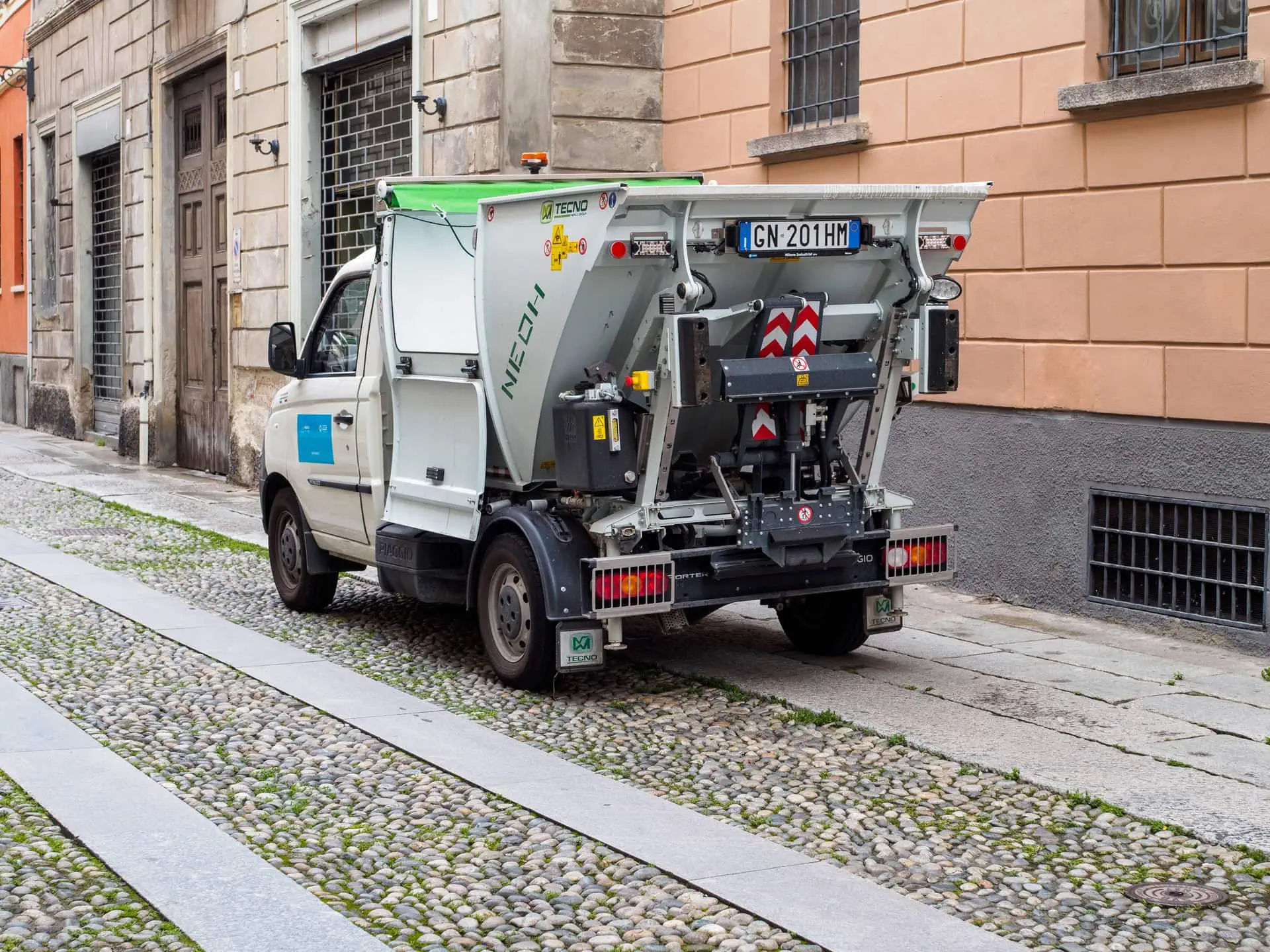
Compact waste collection vehicles developed for narrow streets and densely populated areas offer maneuverability, operational flexibility and efficiency advantages in urban waste management. In Türkiye, vehicles in this class are produced — with smaller-volume superstructures and optimized hydraulic/electric systems — to provide ease of use in waste collection processes.
Sectoral and Technical Structure
Compact waste collection vehicles are designed in smaller dimensions compared with conventional large garbage trucks. This enables easy maneuverability in narrow streets, historic districts or densely populated residential areas. Vehicles classified as “mini” or “compact” garbage trucks offer effectiveness in urban waste collection services with tight turning radii and ease of driving. This definition is widely used in both local and international manufacturer presentations.
These vehicles generally feature hydraulic compaction systems; waste is loaded via a rear-loading system and compacted within the superstructure by means of hydraulic pistons. In this way, collection capacity is optimized, allowing more waste to be transported in a single trip.
In addition, some manufacturers produce compact vehicle superstructures using lightweight materials or compact construction, providing flexibility in confined spaces and lower operating costs.
Standards and Certification Framework
As one of the standards accepted in Europe for waste collection vehicles, EN 1501-1 regulates the safety and operational rules of these vehicles. In production in Türkiye, compliance with this standard is regarded as an important criterion.
Technical requirements such as structural durability of the superstructure, hydraulic system safety, operator protection and the rear-loading mechanism are evaluated within the framework of the standard.
CE compliance of compact vehicles and the conformity of various internal mechanical and hydraulic components with standard production quality can contribute to their acceptance in international markets — supporting their preference in urban sustainable waste collection projects.
National and International Framework
In modern cities, the use of large garbage trucks may not be practical in narrow streets, historic city centers or densely populated residential areas. For this reason, increasing demand for compact waste collection vehicles is observed. While facilitating collection in confined spaces, these vehicles enhance the sustainability and efficiency of waste collection operations.
On the other hand, rising environmental and pollution awareness is driving a shift — particularly toward electric or hybrid-engine compact waste vehicles — to reduce urban issues such as noise, air pollution and traffic congestion. This trend encourages the development of vehicle technologies and motivates manufacturers to offer sustainable solutions.
R&D and Engineering Dimension
In compact waste collection vehicles, using electric propulsion systems alongside conventional hydraulic systems can offer advantages such as energy efficiency, ease of maintenance, and reductions in noise and emissions. This approach supports both environmental and operational sustainability in urban waste collection.
Moreover, optimizing parameters such as superstructure volume, compaction system, loading/unloading mechanism and maneuverability in vehicle design is an important engineering factor in terms of shortening waste collection routes, reducing fuel/energy consumption and lowering maintenance costs. This provides economic advantages for municipalities and private operators.
Systems that enhance operator safety in compact waste collection vehicles — such as rear-view cameras, sensor-assisted loading and emergency stop mechanisms — are highlighted in manufacturer presentations. These components are important for both operator safety and urban traffic and pedestrian safety.
Thanks to ease of maneuvering in confined spaces, efficient waste collection through hydraulic compaction, compliance with applicable standards and electric/lightweight construction options, compact waste collection vehicles offer technical, operational and environmental advantages in urban waste management. These vehicles stand out as a practical and effective solution for narrow and densely populated areas where large garbage trucks cannot be used.
