




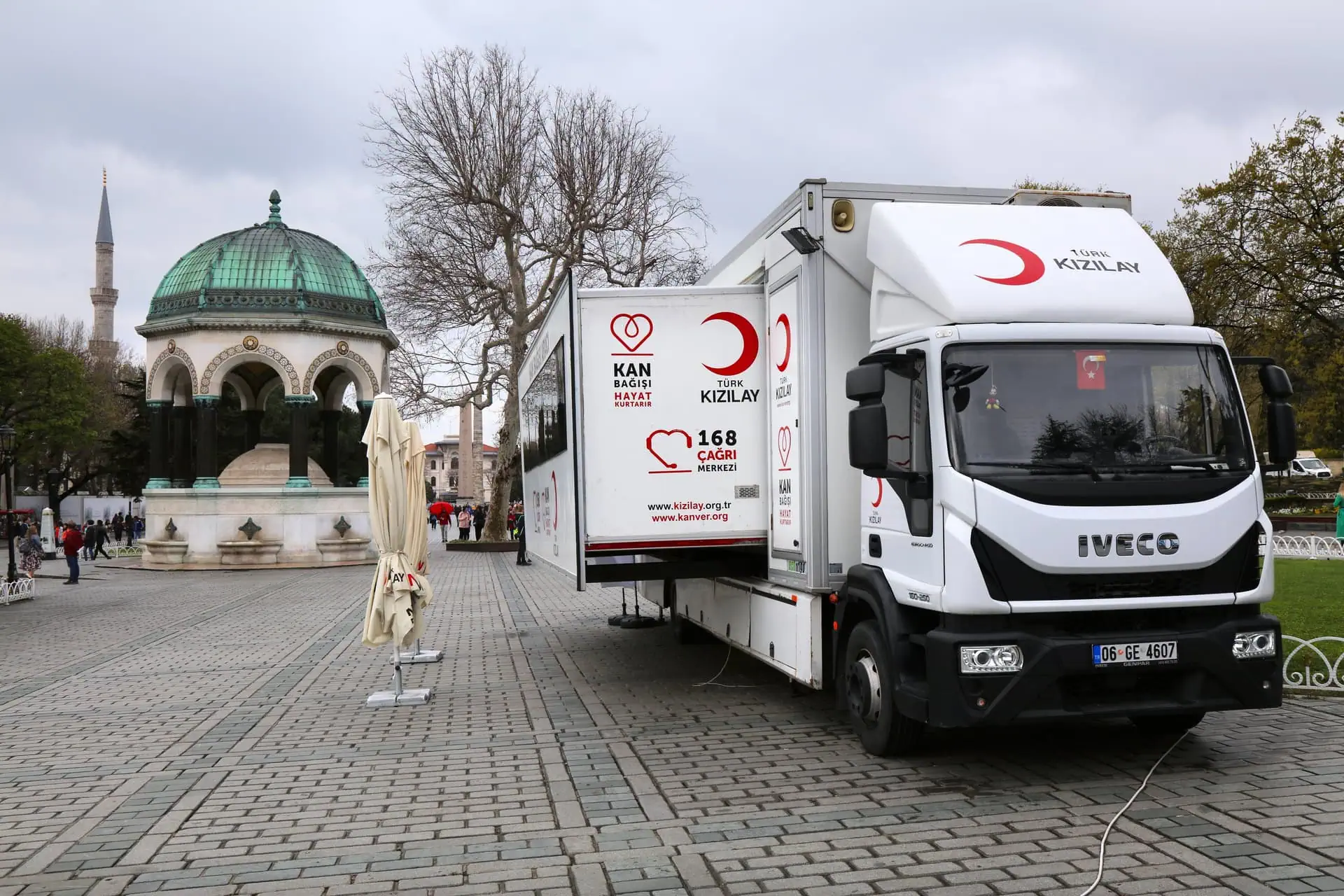
Mobile healthcare vehicles developed in Türkiye — including mobile blood donation units, laboratories, intensive care–supported emergency response vehicles and disaster/triage-focused mobile units — are being developed in line with criteria for technical design, medical equipment layout, energy and hygiene infrastructure. These vehicles are used to rapidly deliver healthcare services in emergencies, disasters or field conditions.
Sectoral and Technical Structure
In mobile healthcare units, core components such as cabin structure, interior equipment layout, fixation of medical devices, climate control–ventilation and energy infrastructure are considered within a framework similar to the technical and safety standards defined for road ambulances. Accordingly, requirements related to stretcher or patient transport equipment, secured medical devices, appropriate lighting, climate control and hygiene are taken into account.
Mobile healthcare vehicle equipment can be flexibly designed according to the intended use, such as general healthcare services, laboratory testing or emergency response. This allows the vehicle to offer a modular structure suitable for both urban healthcare services and isolated or disaster-affected field operations.
Standards and Certification Framework
The EN 1789 standard applicable to road ambulances defines criteria such as vehicle type, patient compartment layout, medical device fixation, interior equipment, climate control, hygiene and safety.
In Türkiye, manufacturers producing ambulance superstructures conduct production and inspection processes based on compliance with this standard, and for ambulances found to be compliant, the Turkish Standards Institution (TSE) issues an EK-C Certificate of Conformity (EK-C).
As mobile healthcare vehicles provide services outside hospital environments, interior equipment and medical device requirements, patient comfort, hygiene, climate control and safety standards need to be carefully planned. Within the scope of EN 1789, provisions are defined for stretcher transport, medical device safety, equipment fixation, interior hygiene and ventilation conditions.
National and International Framework
The modular structure and standards-compliant equipment of mobile healthcare vehicles offer flexibility and rapid operational capability in disaster management, community healthcare services, mobile screening-diagnostic services or emergency interventions. In Türkiye, growing demand for these vehicles from both the private sector and public institutions is increasing the accessibility of mobile healthcare services.
At the same time, production in compliance with internationally recognized standards such as EN 1789 provides the technical foundation for these mobile vehicles to be used in international humanitarian aid, community healthcare projects or cross-border healthcare operations.
Research and Development and Engineering Dimension
Manufacturers of mobile healthcare units are working on modular solutions that simultaneously provide cabin insulation, interior climate control, energy infrastructure, medical device integration and hygiene conditions. In particular, in-vehicle energy management — including electricity, climate control, device power supply and lighting — stands out as a key engineering focus.
In addition, flexible interior equipment and modular layout solutions are being developed for different use profiles such as mobile laboratories, emergency response vehicles or screening units. This offers advantages in terms of both equipment diversity and the range of usage scenarios. The integration of mobile healthcare units with well-planned superstructure, medical equipment and energy–climate infrastructure increases on-site intervention capacity in disaster, emergency or field conditions, offering a practical solution for routine healthcare services, mobile screening or emergency medical response.


