



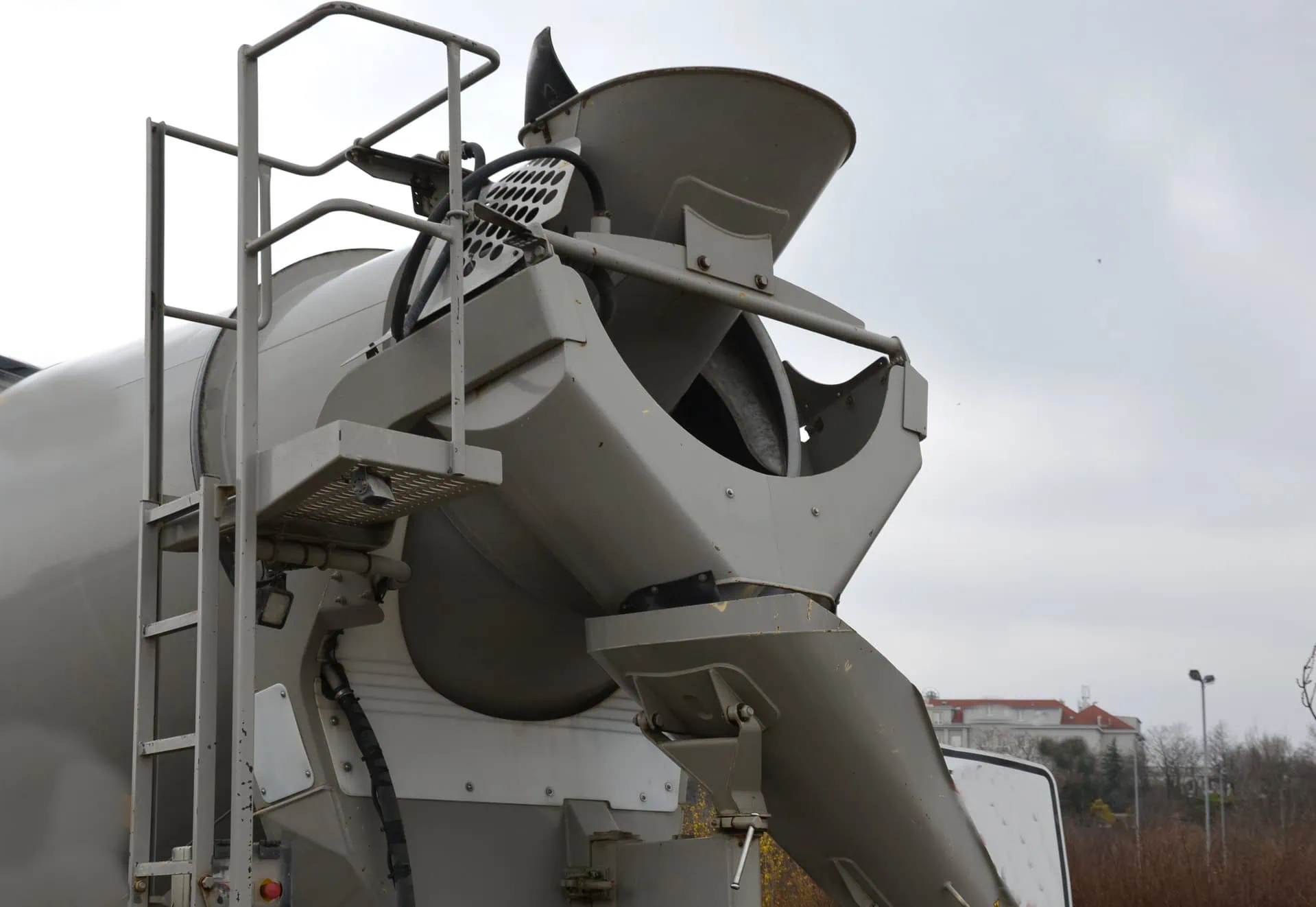
In Türkiye, ensuring that concrete mix quality complies with standards not only at the batching plant but also on site is becoming increasingly important in truck-mounted mixers used for concrete production and delivery. Sensor-based measurement and automatic mixing control systems contribute to managing concrete consistency and composition in a more traceable and controllable manner, both at plant dispatch and throughout the delivery process.
Sectoral and Technical Overview
In next-generation truck-mounted concrete mixers, load cells, moisture sensors, hydraulic pressure/drum speed sensors, and temperature sensors can be used together for mix control. These components enable near real-time monitoring of parameters such as water-to-cement ratio, consistency (e.g., slump), mixing homogeneity inside the drum, and drum rotation speed.
In applications where moisture and water content are continuously measured, the consistency and water dosing of fresh concrete can be adjusted more precisely, helping the concrete arrive on site within the expected workability range. Some on-board systems estimate concrete consistency indirectly by analyzing drum behavior and hydraulic pressure. This approach aims to reduce dependence on the operator’s subjective judgment.
Control modules installed on the mixer can be supported by embedded control units or in-cab displays that evaluate sensor data. This allows the operator to manage the mixing process, drum speed, waiting times, and, where necessary, water or admixture additions in a more controlled manner.
Standards and Certification Framework
In Europe, materials used in concrete production, mix proportions, and performance criteria are defined within the framework of EN 206. EN 206 is regarded as one of the main reference standards, defining concrete constituents, mix design, durability classes, and recommended limit values for properties such as water/cement ratio, minimum cement content, and consistency.
The properties of aggregates used in concrete are addressed in EN 12620. This standard defines the characteristics required for natural, manufactured, or recycled aggregates to be used in concrete, including grading, strength, and other material properties, and is applied together with EN 206.
For calibration and traceability of load cells, moisture sensors, and other measurement components used in smart mixer applications, calibration practices carried out by laboratories that operate an ISO 9001 quality management system and are accredited to EN ISO/IEC 17025 can be taken as reference. This approach supports the traceability and repeatability of measurement data used in mix control.
The European Union’s Measuring Instruments Directive (MID 2014/32/EU) provides a common regulatory framework for meters and systems with measurement functions. Systems that continuously and dynamically measure liquid quantities may fall under this scope, enabling, where required, the legal metrological monitoring of water or admixture dosing systems.
National and International Context
Monitoring concrete mix quality not only at plant exit but also during transportation and on-site processes is increasingly recognized as a method for supporting quality consistency in both local projects and international concrete supply chains. Globally, systems installed on truck mixers that derive data from drum behavior, hydraulic pressure, or dedicated sensors enable the creation of digital records for each delivery, including parameters such as consistency and air content.
Integrating these data into project records facilitates retrospective verification of compliance with the specified concrete class, control of consistency variations between deliveries, and earlier detection of potential non-conformities on site. Digital mix monitoring infrastructure provides an additional verification layer for quality assurance and technical reporting processes, benefiting both contractors and project owners.
R&D and Engineering Dimension
R&D activities related to smart concrete mixers focus on improving sensor performance, developing durable electronic architectures suitable for site conditions, wireless data transmission, cloud-based data logging, and decision-support algorithms. By jointly evaluating parameters such as drum speed, mixing time, waiting time, internal drum temperature, and mix moisture, a more objective assessment of mix homogeneity and conformity to the designed consistency can be achieved.
Some systems also include functions such as automatic water or admixture addition, automatic adjustment of drum speed, or warning generation when non-compliant parameters are detected—without requiring operator intervention. These automation solutions provide an engineering approach aimed at controlling practices such as manual water addition on site and reducing production errors.
The use of lighter materials in drum and drive systems, optimized drive solutions, and automatic drum washing applications are also among the R&D topics evaluated for reducing fuel/energy consumption and making cleaning processes more predictable.
Smart concrete mixers introduce a more controlled and transparent structure to concrete production and delivery processes through sensor-assisted mix monitoring, digital data recording, and standards-based mix design—supporting both quality assurance and operational efficiency.
