



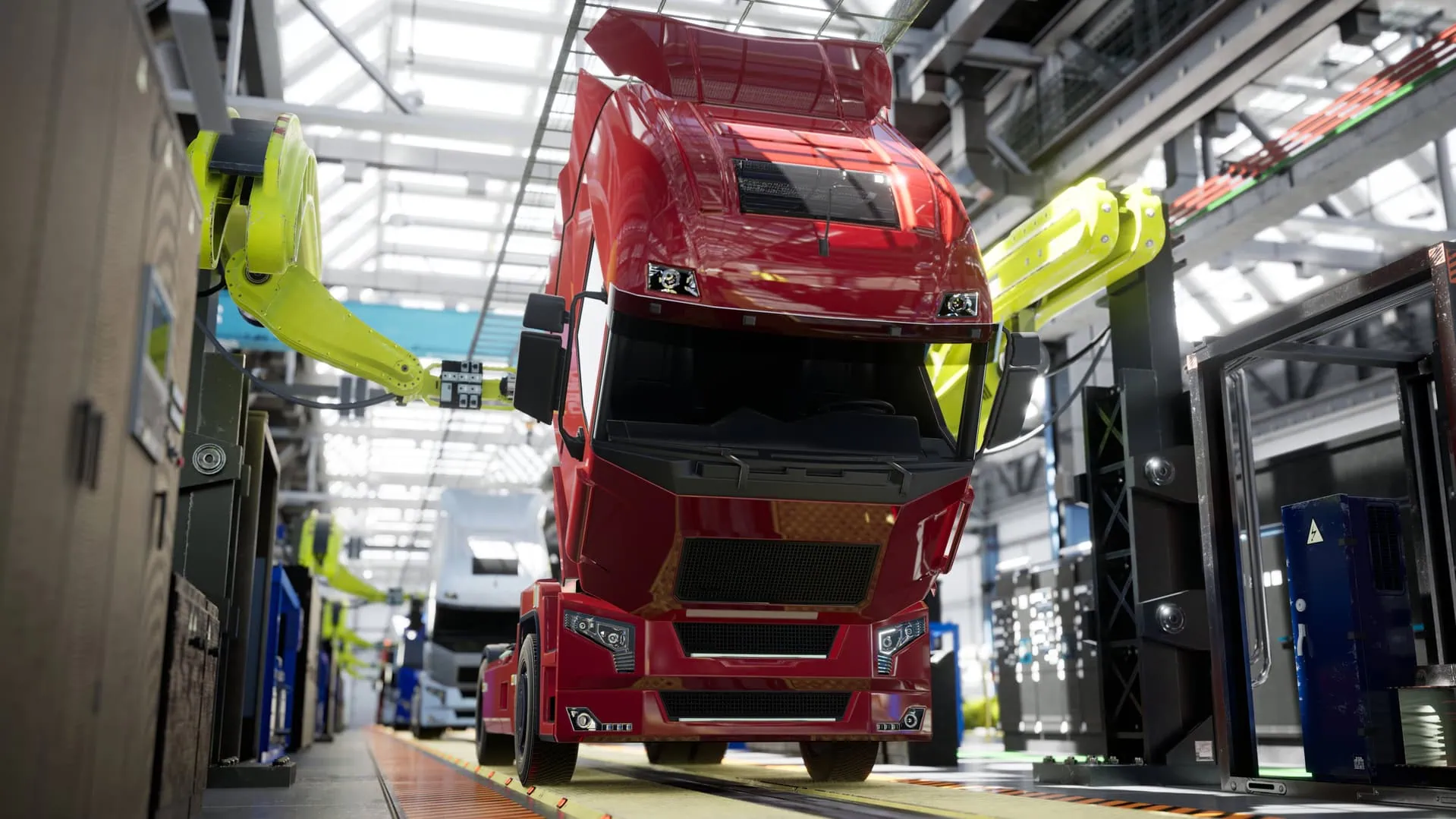
Vehicle superstructure equipment (VSE) production in Türkiye continues to develop as an important sub-branch of the automotive industry through superstructure equipment for bodies, trailers, tankers, fire-fighting vehicles, and other special-purpose superstructures. The manufacture of bodies and trailers for motor vehicles is defined under code 29.20 within the NACE Rev.2 international classification system and is also monitored in Türkiye under this code.
Scope and technical orientation of the vehicle superstructure equipment sector
Vehicle superstructure equipment manufacturers develop superstructure solutions suitable especially for platforms such as trucks, tractor units, light commercial vehicles, and municipal service vehicles. These solutions include a broad product range covering fire-fighting vehicles, waste collection systems, tankers, refrigerated superstructures, crane-mounted superstructures, and construction equipment. Many manufacturers operating at the national level focus on meeting the operational needs of both public institutions and the private sector through project-specific designs and superstructures configured to order.
Within this framework, a shift toward lightweight superstructure structures, aluminum or high-strength steel chassis systems, energy-efficient hydraulic solutions, and modular superstructure designs stands out across the sector. Manufacturers are investing in design and material technologies aimed at reducing the own weight of vehicle superstructure equipment, increasing payload capacity, lowering fuel consumption, and limiting maintenance costs.
Standards, quality management, and certification practices
A significant portion of VSE manufacturers in Türkiye have adopted internationally recognized certification schemes in the fields of quality and environmental management. The sector includes manufacturers holding ISO 9001 Quality Management System certification, as well as companies with additional technical certifications in areas such as refrigerated superstructures and trailers (for example, FRC for refrigerated transport).
For superstructure equipment manufacturers targeting access to the European Union market, products bearing the CE marking have become a common practice. As an indicator of compliance with relevant EU directives and technical legislation, the CE marking stands out as a fundamental requirement, particularly for the placing of trailers and superstructure equipment on the European market. The majority of companies producing in Türkiye and exporting to the EU complete product-based conformity assessments and place their products on the market with CE marking, strengthening both product safety and compliance with technical regulations.
On the environmental management side, the use of systems such as ISO 14001 provides a structured approach to waste management, energy consumption, and resource efficiency, supporting the sustainability dimension of VSE production. The adoption of such systems also contributes to alignment with the EU’s environment-focused regulations.
Position within the automotive supply industry and export linkage
Vehicle superstructure equipment manufacturers are positioned within the supplier structure of Türkiye’s automotive industry. The manufacture of motor vehicle bodies and trailers is monitored in general statistics under the heading of motor vehicles, trailers, and semi-trailers manufacturing and constitutes a complementary link within the automotive supply chain.
Publicly available data indicate that Türkiye’s automotive industry is one of the sectors with the highest share of national exports and has reached record levels in recent years. According to data from the Uludağ Automotive Industry Exporters’ Association (OİB) and relevant public institutions, Türkiye’s automotive industry realized exports of approximately USD 35 billion in 2023 and maintained high-volume export performance throughout 2024 and 2025.
It is observed that a large portion of these exports is directed to European Union countries, with the EU market maintaining its position as the primary target market across the automotive sector. Türkiye’s progress in technical legislation alignment with the EU within the framework of the Customs Union encourages the adoption of EU norms in automotive and supplier industry products and supports the implementation of similar compliance processes in the VSE sector.
Specifically for VSE, detailed and regularly published statistics on total production volume, the number of exported superstructures, or country-based export distribution are limited in public databases. As a result, the quantitative size of this sub-segment is more commonly monitored through general trends in the automotive supply chain and company-level disclosures.
Electric and hybrid superstructures and R&D activities
As is the case globally, the transformation in electric and hybrid vehicle technologies in Türkiye is influencing the design and R&D agenda of vehicle superstructure equipment manufacturers. Applications such as electric fire-fighting vehicles, electric or hybrid waste collection systems, and low-emission municipal service vehicles are among the new superstructure concepts being developed by manufacturers. In this field, a notable orientation is observed toward hydraulic drive systems compatible with electric vehicles, control solutions suitable for energy recovery, and superstructure designs aligned with battery management.
R&D activities are not limited to propulsion systems but also include the widespread use of engineering tools such as computer-aided design and finite element analysis. Domestic manufacturers are conducting design processes through increasingly digitalized engineering tools with objectives such as increasing superstructure strength, optimizing chassis connection points, balancing weight reduction with payload capacity, and enhancing operational safety.
General assessment and sectoral outlook
Overall, vehicle superstructure equipment production in Türkiye continues to develop in an integrated manner with the automotive supplier industry within the framework of body and trailer manufacturing under NACE 29.20. Lightweight superstructure structures, energy-efficient hydraulic systems, and modular superstructure designs stand out among the sector’s key technical orientations.
Demand in national and international markets, the strong export performance of Türkiye’s automotive industry, and the process of alignment with EU technical legislation emerge as factors supporting the competitive position of VSE manufacturers in external markets. However, due to the limited availability of detailed official statistics specific to the VSE sub-segment, quantitative assessments of the sector are largely monitored through trends based on general automotive industry data and manufacturer statements. This makes qualitative monitoring of sectoral development—through certification, technology investments, and export linkages—more important.
