



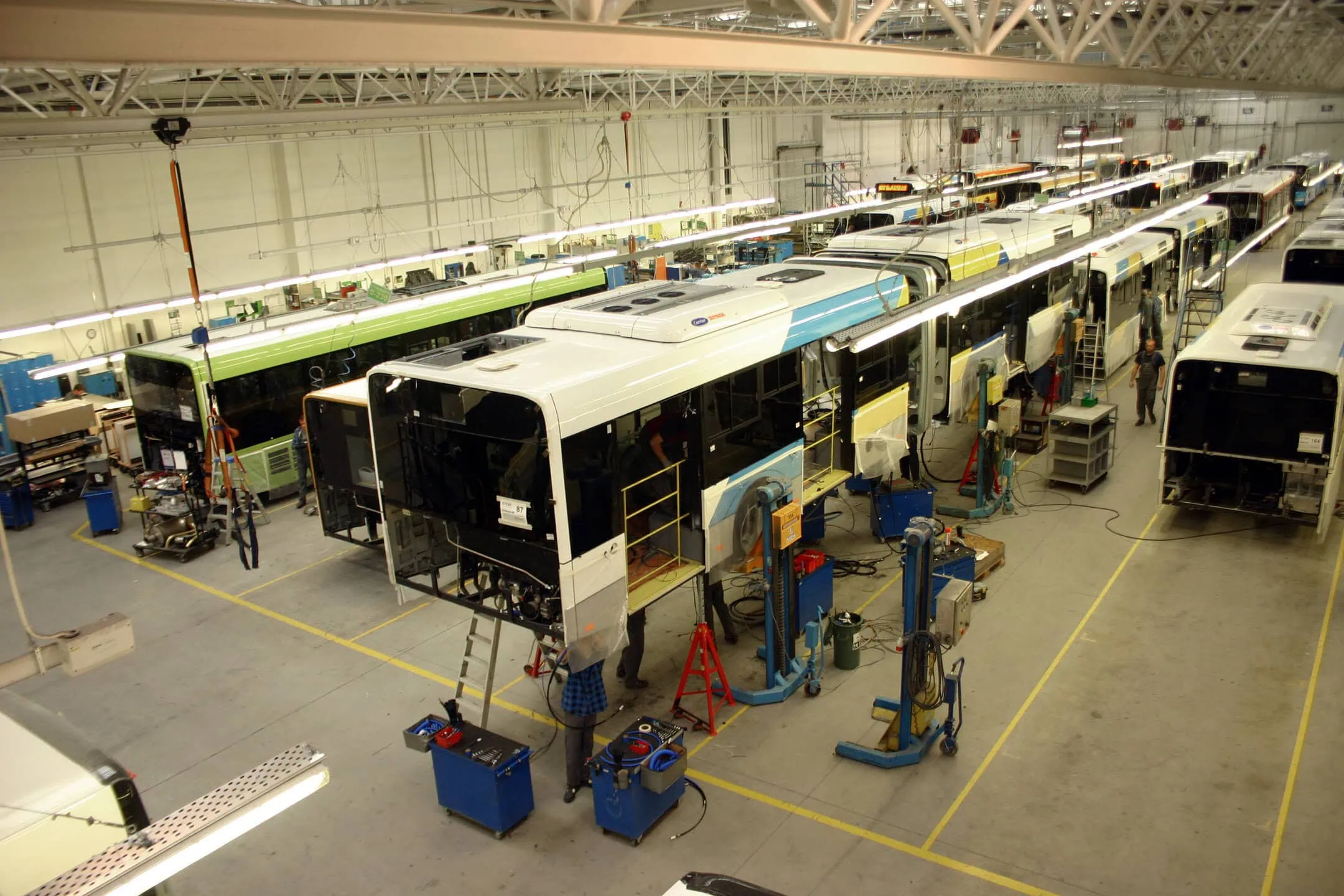
Emphasis on Standards and Safety in Electric Bus Technology
In recent years, electric bus production has been focusing on compliance with technical standards alongside environmental sustainability targets in urban public transportation, battery technology, and safety–functionality requirements in high-voltage propulsion systems. This transformation has made both domestic development programs and alignment with international norms increasingly important.
Technical Fundamentals in Propulsion, Battery, and Energy Management
On electric bus platforms, battery modules, power electronics, and control units need to be developed in line with criteria such as high voltage, thermal management, battery safety, and energy efficiency. Battery thermal management systems are critical in terms of battery life and safety; the literature includes assessments on the ideal operating range of lithium-ion batteries and the importance of thermal management.
In addition, in braking and energy management systems, the implementation of protection mechanisms and safety controls for the safe operation of battery and vehicle control systems—particularly in high-voltage systems—is considered a priority.
Functional Safety: Application of ISO 26262
In electric buses, the international ISO 26262 standard stands out as the applicable functional safety norm for the automotive sector to ensure the safety of electrical/electronic (E/E) systems. ISO 26262 provides a safety lifecycle covering hardware, software, system integration, production, operation, and service processes. In this way, the safe operation of critical E/E components such as battery management systems (BMS), braking–propulsion control systems, and high-voltage lines is targeted.
Specifically in battery management, electronic control and protection systems can be applied against risks such as overloading, overheating, short circuit, overcharging, and over-discharging. Such protections aim to ensure safety both in daily use and under fault conditions.
Battery Safety and Fire Risk Management
In electric vehicles, batteries—especially lithium-ion cells—can pose a fire risk depending on operating environment, temperature, and charge/discharge cycles. For this reason, manufacturers place battery packs in sealed enclosures and implement safety measures such as insulation in high-voltage lines, thermal monitoring, and emergency shutdown mechanisms.
Thermal management systems are critical for battery performance and safety—the optimization of parameters such as battery life, cycle count, and thermal stability, as well as the prevention of potential overheating or thermal runaway scenarios, is required.
Charging Infrastructure, Standards, and the Need for Integration
In integrating electric buses into public transportation, not only vehicle safety but also the safety and standards compliance of charging infrastructure, electrical/electronic systems, and battery management are important. In this way, a safe and compatible ecosystem can be established between both vehicles and infrastructure. The electric vehicle community and technical standards authorities consider the development of this alignment to be critical.
Standards-Compliant Electric Buses — A Fundamental Step Toward Sustainable and Safe Transportation
In electric bus production, when battery safety, high-voltage systems, energy efficiency, thermal management, environmental performance, and the functional safety of E/E systems—all of these technical components—are addressed in compliance with international norms, it appears possible in the long term to build a safer, more sustainable, and more responsible public transportation system. In particular, the adoption of functional safety standards such as ISO 26262 is critical in ensuring that this transition rests on solid foundations.
