




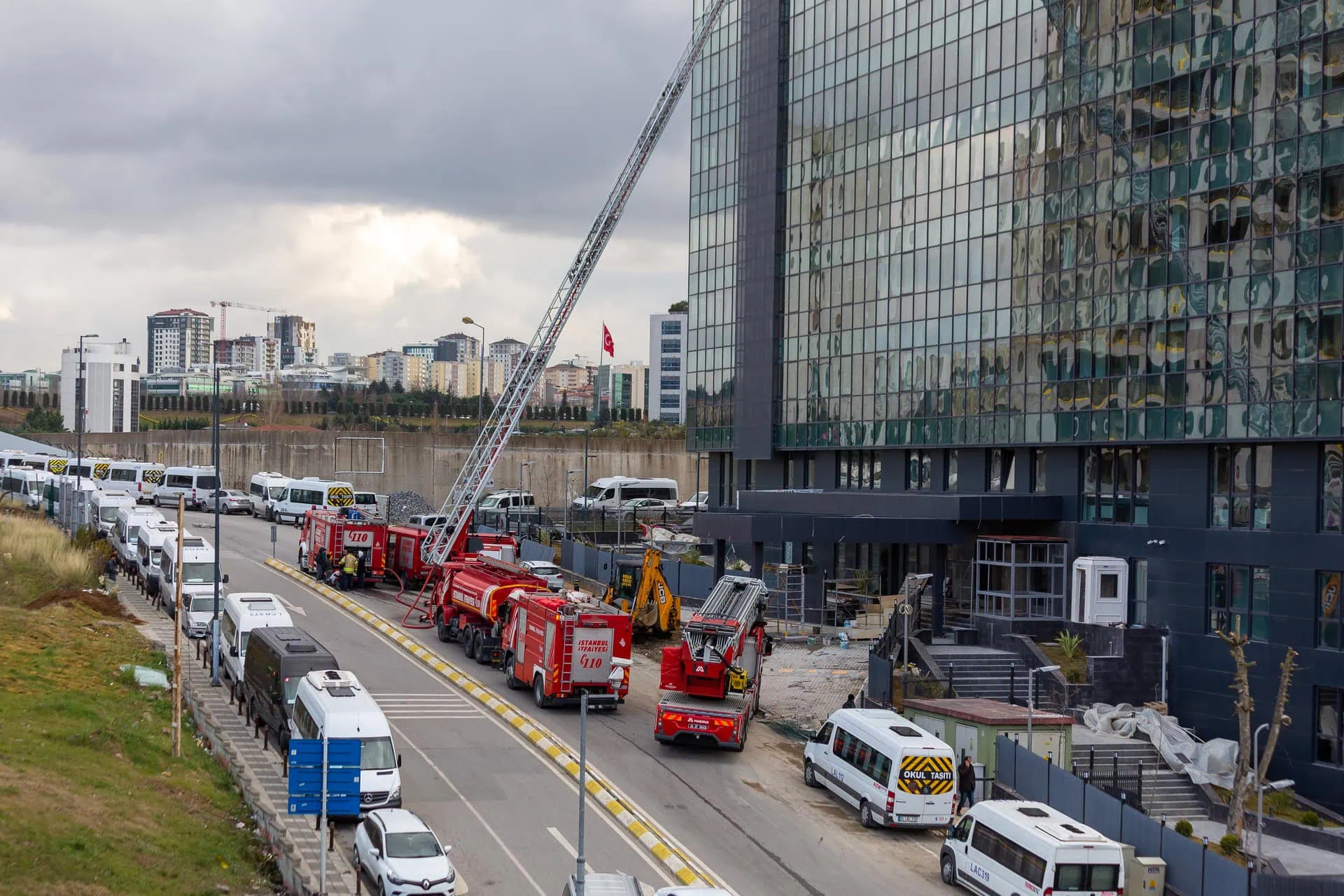
In Türkiye, a strengthening trend is observed toward the use of composite materials in firefighting vehicles designed for intervention in high-rise buildings, replacing traditional metal bodies and superstructures as well as tower/ladder assemblies. This approach stands out in the sector as an alternative production model due to advantages such as reduced weight, corrosion resistance, ease of maintenance, and structural strength.
Technical and Sectoral Developments in Composite Materials
Composite materials are structures formed through the combination of matrix and reinforcement components and are known for characteristics such as high strength, low weight, and resistance to corrosion and environmental effects. In this context, carbon fiber, glass fiber, and similar reinforced polymer composites are widely used in fields such as automotive, transportation, and construction.
In international firefighting vehicle production, aluminum, plastic, and composite materials may also be preferred as body and superstructure materials; this provides advantages both in terms of weight reduction and resistance to corrosive environments, as well as longer service life and reduced maintenance requirements.
In Türkiye in recent years, it is observed that infrastructure for composite material production and application has expanded and that companies provide services in this field. For example, some local companies operating in areas such as civil defense, transportation, and heavy vehicle spare parts state that they have composite production capacity.
These developments indicate that composite tower, body, or superstructure systems can be technically evaluated for vehicles intended for intervention in high-rise structures.
Standards, Testing Processes, and Certification
In the use of composite materials, engineering criteria such as matrix–reinforcement compatibility, load-bearing capacity, structural durability, fatigue resistance, and safety against fire and mechanical effects come to the fore. These properties of composites can be verified through appropriate design and testing processes.
Especially in hydraulic platform and ladder vehicles designed for high-rise buildings, parameters such as weight, balance, strength, stabilization, and safety are critical; therefore, if composite materials are to be used, these criteria must be addressed meticulously in design and testing processes.
In this context, material tests, static and dynamic load tests, fatigue and environmental durability tests, and certification processes need to be carried out in accordance with standard engineering and quality control procedures.
National and International Framework
In Türkiye, the breadth of the composite sector and the increase in composite production capacity make the use of composites possible in areas such as transportation and automotive, heavy vehicles, maritime industries, and defense.
In international firefighting vehicle production, it is known that alongside metal-superstructure vehicles, models with composite or lightweight material superstructures are also considered alternatives, and that some manufacturers develop solutions in this direction.
In this case, manufacturers in Türkiye that adopt composite technology may offer lighter and more maneuverable vehicles to meet domestic high-rise building needs, while also increasing their international competitiveness.
Research and Development and Engineering Dimension
The use of composite materials requires research and development processes such as matrix–reinforcement compatibility, design optimization, strength and safety testing, and analyses of service life and durability. Companies producing composite materials in Türkiye and capable suppliers in this field have the infrastructure and engineering capabilities to meet these requirements.
With the use of composites, advantages such as improved weight-to-performance balance, corrosion resistance, and potential improvements in maintenance and operating costs make the evaluation of composite tower–superstructure systems in firefighting vehicles attractive.
Sectoral Situation
The trend toward the use of composite materials in firefighting vehicles produced for high-rise building interventions is becoming more pronounced alongside the development of technical and sectoral infrastructure. Composite technology, thanks to its high strength and low weight advantages, may bring benefits such as flexibility, maneuverability, and maintenance durability to firefighting fleets.
However, this transition needs to be carried out in accordance with appropriate standards, testing, certification, and safety requirements. Engineering parameters such as fire resistance, service life, load-bearing capacity, and stabilization of composite structures should not replace conventional metal systems without careful evaluation.
Overall, it can be stated that both the composite material supplier infrastructure in Türkiye and the capabilities of heavy vehicle and special-purpose vehicle manufacturers are at a level that can support this transition.
Keywords
firefighting vehicle, high-rise intervention, composite material, carbon fiber, lightweight superstructure, composite body, hydraulic platform, fire safety, manufacturer in Türkiye, modular superstructure


